
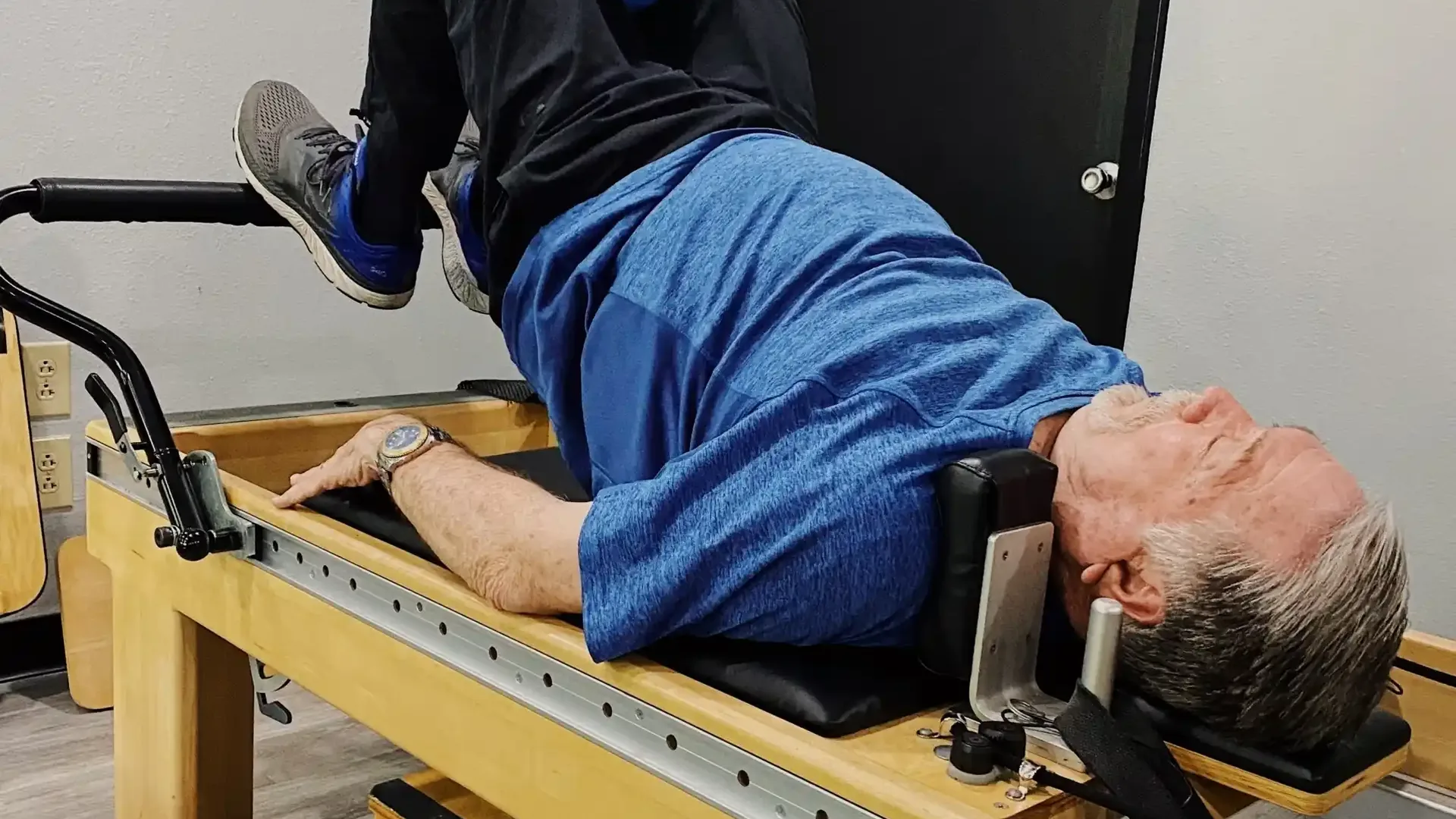
With a new knee, motion is the thing you cannot put off.
Knee replacement rehab is dominated by one problem that a hip does not have to nearly the same degree: the knee stiffens. Scar tissue lays down around a new knee quickly, and range of motion that is not regained early becomes much harder to regain later. That is why the early sessions push bending and straightening rather than simply protecting the joint.
Full straightening matters more than most people expect. A knee that settles a few degrees short of flat looks like a small thing and is not: it makes you limp, it loads the other leg, and it wears you out by the afternoon. Swelling and a quadriceps that has stopped switching on properly are the usual reasons the last few degrees do not come, and both respond to treatment. Your surgeon sets the protocol and any limits on weight through the leg, and we work inside it.
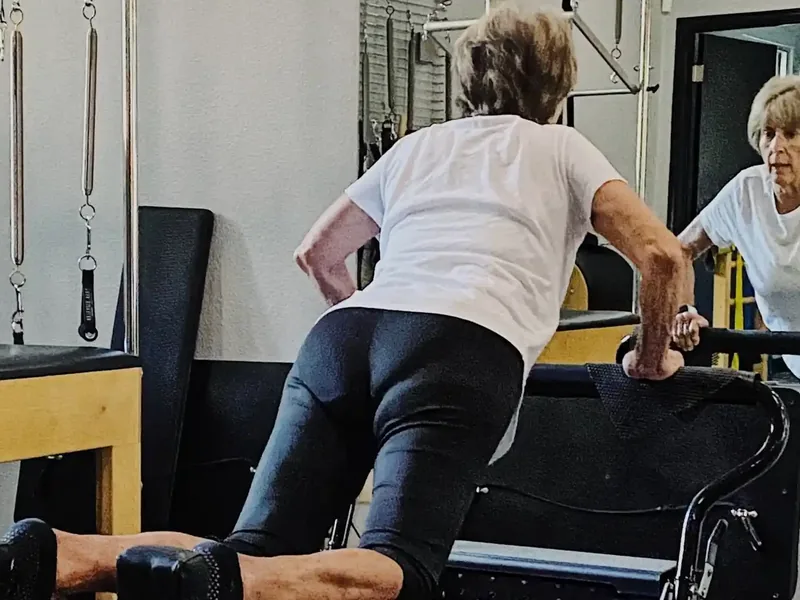
What actually gets in the way after a knee replacement.
Most of these are expected, and all of them are workable. Some things are not: calf pain, swelling or warmth, sudden shortness of breath, chest pain, fever, spreading redness or drainage from the incision, or a knee that gives way completely mean you should contact your surgeon or seek medical care straight away rather than waiting for your next session.
Losing the Last Few Degrees of Straightening
A knee that will not go completely flat, which changes how you walk far more than such a small angle suggests it should.
Bending Short of What You Need
Not enough bend for a normal stair step, a car footwell, or getting up off a low seat without hauling on something.
Swelling That Will Not Settle
Persistent puffiness around the knee, which limits the bend and switches the quadriceps off at the same time.
A Tight, Stuck Scar
Skin and tissue around the incision that no longer glides, restricting the bend, and often numb to one side of the scar.
Quadriceps Shutdown
A thigh muscle that will not fully contract, so the leg feels unreliable and the knee dips slightly under you on a step.
Stairs One at a Time
Going up or down leading with the same leg every time, because single-leg control on the operated side has not come back yet.
Chase the motion early, then build the strength to use it.
Your surgeon's protocol sets the boundaries, including how much weight you may put through the leg, and we work inside it. Within those limits the early priority is not ambiguous: get the knee straight, get the bend back, and get the swelling down, because those are the things that are hardest to recover if they are left too long. Hands-on work on the kneecap, the scar and the surrounding soft tissue is a genuine part of that, not an extra.
Alongside it we rebuild the quadriceps, which is the muscle that decides whether the knee feels trustworthy on a step. Pilates-based work on the reformer lets us load the leg through range with support and control before you could manage the same thing standing. After that it is stairs, standing up from a chair without using your hands, walking without a limp, and whatever you have told us you want to get back to.
Bring your surgeon's protocol and we will work from it. Texas direct access means no referral is needed to start, and most patients are seen within 48 business hours or less.
In a patient's own words.
“Pyramid Physical Therapy has been so beneficial to me! Hate to say, but in the last 2 yrs, I have had 3 surgeries. The therapists there have seen me through rehab for all!”Bobbi B. · Post-Surgical Rehab
Request Your Visit
We are in-network with Aetna, Blue Cross Blue Shield, Humana, Medicare Part B, Tricare and United Healthcare. If your surgeon has given you a protocol, bring it with you.
Tell us when your knee was done and how the bend and the straightening are coming along. We call back to confirm a time and check your benefits before you arrive, usually within 48 business hours.
You’re all set.
We’ll reach out within one business day to confirm your appointment. If you need to speak with us sooner, call us directly.