
Most sports injuries are a load problem.
Some are pure accident: a tackle, a rolled ankle on uneven ground, a fall. Many more are the result of tissue being asked to do more than it had been prepared for. Training volume climbs, a mobility restriction goes unnoticed, one side quietly does more of the work, and eventually a tendon, muscle or ligament reaches its limit.
That distinction shapes the plan. Healing the injured tissue is the first half of the job. The second half is finding what allowed it to happen, because going back to the same sport with the same mechanics and the same left-to-right difference puts the same tissue under the same stress.
What we see across sports and seasons.
Most of the weekend warriors we treat land somewhere between one bad moment and a slow accumulation. Before rehab starts, though, an obvious deformity, an inability to put weight on the limb, or numbness that will not clear should be assessed by a physician.
Sprains
Overstretched or torn ligaments, most often at the ankle or knee, usually with swelling and a wobbly feeling afterward.
Muscle Strains
A pull or tear in a muscle or its tendon, common in the hamstring, calf, groin, and shoulder.
Bone Stress Pain
A focal, worsening ache from repeated impact, most often in runners who added distance quickly. This one needs a physician's assessment too.
Tendon Overload
Pain that switches on with loading and settles with rest, typical of the Achilles, the tendon below the kneecap, and the rotator cuff.
A Joint You Do Not Trust
A knee, ankle or shoulder that feels loose or unreliable, especially when you change direction at speed.
Nagging Pain That Will Not Clear
The ache that goes quiet with a week off and comes straight back the moment you train again.
Rehab that ends where your sport begins.
Treatment starts by working out what the tissue can currently tolerate, then loading it deliberately from there. Your licensed physical therapist measures strength and range on both sides, so progress is judged against your other limb rather than against a guess.
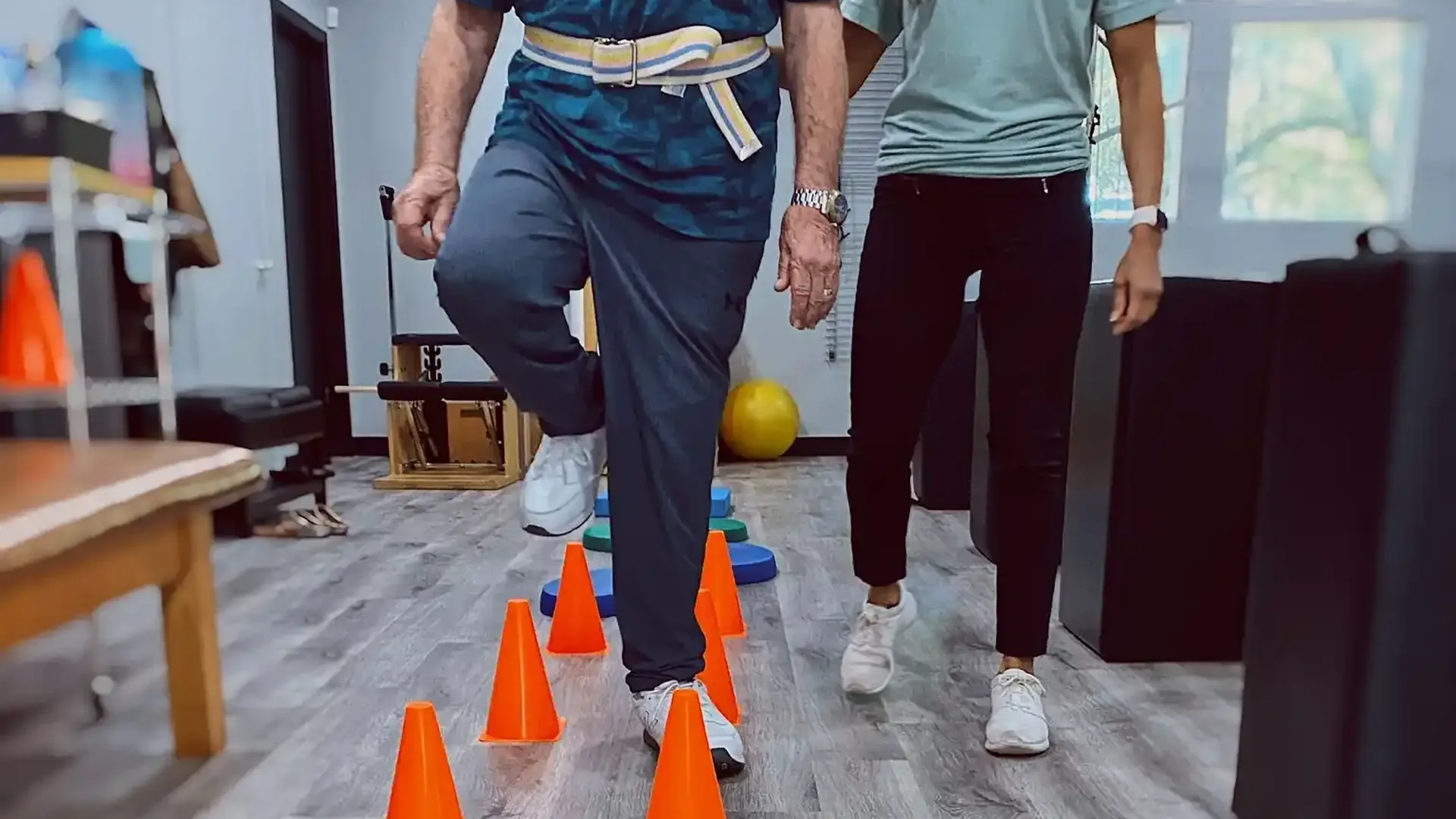
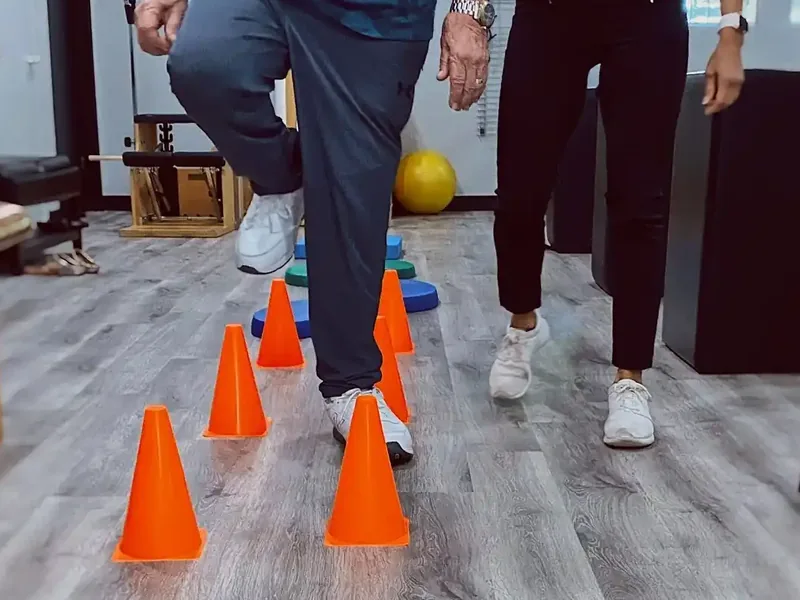
Alongside that, we address the mechanics. Hands-on work restores joint motion, Pilates-based training builds the trunk and hip control most amateur athletes are short on, and the open floor lets us rehearse cutting, landing and agility work before you take any of it back to the field.
No referral needed to start in Texas. We are in-network with six major carriers, and most patients are seen within 48 business hours or less.
Request Your Visit
In Texas you can see a licensed physical therapist without a doctor's referral for up to 10 consecutive business days. We are in-network with Aetna, Blue Cross Blue Shield, Humana, Medicare Part B, Tricare and United Healthcare.
Tell us what happened and what you are trying to get back to. We call back to confirm a time and check your benefits before you arrive, usually within 48 business hours.
Thank you.
Andrea will call you back to confirm a time and verify your insurance benefits. If you would rather talk it through now, call the clinic directly.