
Staying upright is a skill, and skills can be rebuilt.
Balance is not one system. It is your eyes, the balance organs of the inner ear, and the sensors in your feet, ankles and hips all reporting at once, with leg strength and quick reactions doing the correcting. When any part of that becomes slower or weaker, walking stops being automatic and starts taking attention.
That shows up long before a fall does. Steps get shorter. Turns get careful. You start touching furniture on the way across a room, or you quietly stop going places where the ground is uneven. Weaker hips and ankles, stiff joints, changes in sensation, and the ordinary caution that follows one bad stumble all feed each other, and every one of them is something we can work on.
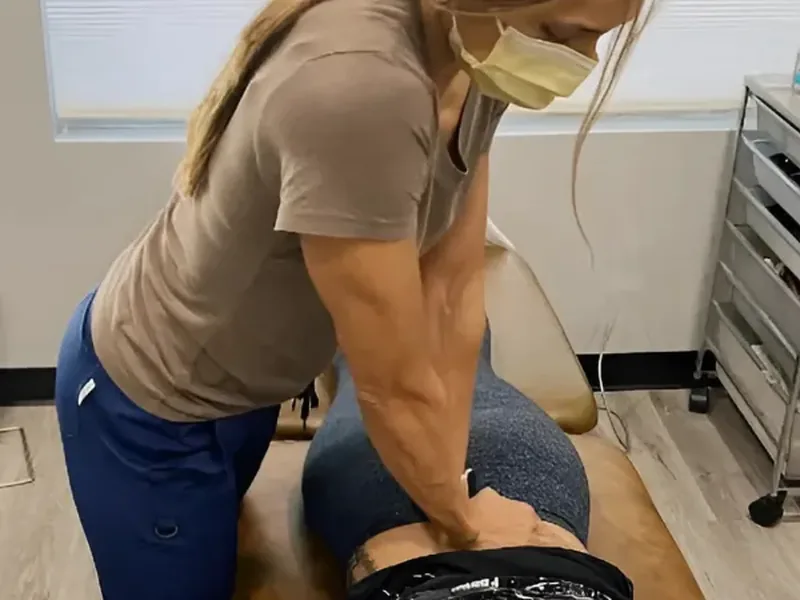
The signs usually arrive quietly.
Most people notice the workaround before they notice the problem. A fall involving a head injury, a sudden change in how you walk, or new weakness or numbness in a leg needs a physician's evaluation first, and so does any fall you cannot explain.
Reaching for Walls and Furniture
Touching a counter, a wall or the back of a chair on the way through a room, often without noticing you are doing it.
Shorter, More Careful Steps
A stride that has quietly shortened, with more time spent on two feet and less confidence pushing off the back leg.
Trouble Turning
Needing several small shuffling steps to change direction, and feeling least steady in the middle of the turn.
Unsteady in the Dark
Noticeably worse balance at night or in a dim hallway, when your eyes can no longer do the work your feet used to do.
Uneven Ground Feels Risky
Grass, gravel, curbs and ramps that used to be nothing now take planning, or get avoided altogether.
Holding Back Because of a Fall
Cutting out errands, outings or stairs because of what might happen, which reduces the very activity that keeps balance sharp.
Train the balance you actually use.
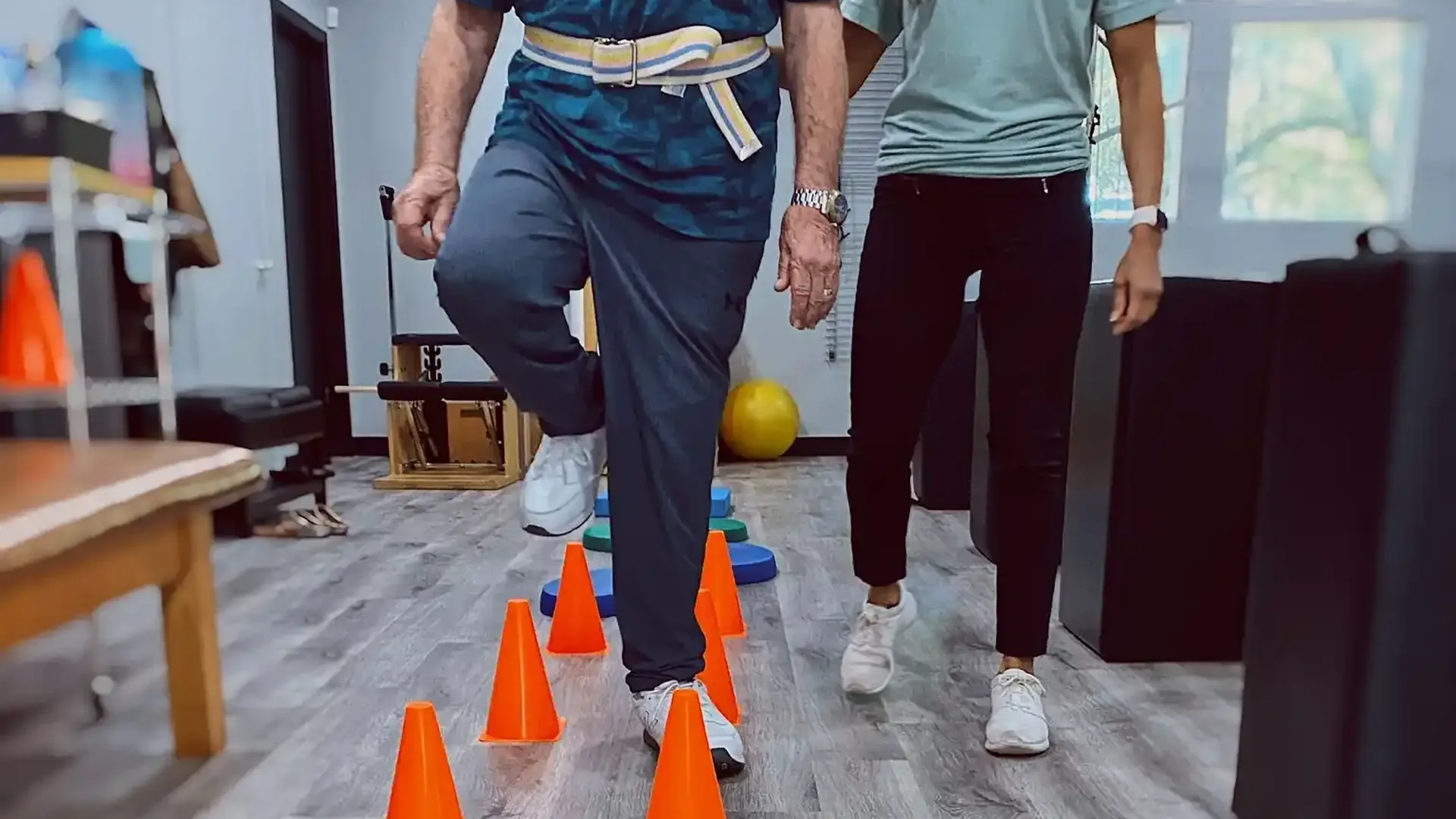
Your licensed physical therapist starts by watching you move: how you stand, how you walk, how you turn, how you rise from a chair and manage a step. That is what shows us where the ground has been lost, whether it is hip and ankle strength, restricted joint movement, slow reactions, or a walking pattern that adapted around an old injury and never changed back.
The clinic has an open floor for exactly this work, with cones and balance discs for graded standing, stepping and reaction training, and a Pilates studio for the strength underneath it. Reformer and tower work lets us load the hips, ankles and trunk in supported positions first, then we take it back to standing and walking. Some causes of unsteadiness are medical rather than musculoskeletal, and if what we see points that way we will say so and ask you to see your physician.
Texas direct access means no referral is needed to start. We are in-network with six major carriers, and most patients are seen within 48 business hours or less.
Request Your Visit
In Texas you can see a licensed physical therapist without a doctor's referral for up to 10 consecutive business days. We are in-network with Aetna, Blue Cross Blue Shield, Humana, Medicare Part B, Tricare and United Healthcare.
Tell us where you feel least steady. We call back to confirm a time and check your benefits before you arrive, usually within 48 business hours.
You’re all set.
We’ll reach out within one business day to confirm your appointment. If you need to speak with us sooner, call us directly.