
A cuff tear is a tendon problem, not a snapped cable.
The rotator cuff is four muscles whose tendons wrap the top of the arm bone and hold it centered in a shallow socket. A tear means one of those tendons has lost fibers, either partway through its thickness or all the way through. Most tears are degenerative: the product of years of tendon change and repeated load, developing slowly enough that many people cannot name the day it started.
Others happen in a moment, from a fall onto an outstretched arm, a heavy lift, or a hard pull. Which tendon is involved, how big the tear is, how long it has been there, and how much strength you still have all matter more than the word on the imaging report. Cuff tears are also found on scans in plenty of shoulders that do not hurt at all.
What a cuff tear tends to feel like.
Weakness is the symptom that separates a cuff tear from most other shoulder pain. If your arm went weak suddenly after a fall or a violent pull and you cannot lift it at all, get an orthopedic evaluation promptly rather than waiting to see whether it settles.
Weakness Lifting the Arm
The arm can be raised with help, but it drops or gives out when you try to lower it slowly on your own.
Ache on the Outer Upper Arm
An ache that settles over the outside of the upper arm rather than deep inside the joint itself.
Worst at Night
Pain that peaks in bed, especially lying on that side, and is often what finally brings people in.
Overhead Tasks Become a Project
Reaching a shelf, hanging laundry, or washing your hair turns into something you sequence around.
Power Down, Range Near Normal
Motion that looks close to normal while strength is clearly less than on the other side.
Grating or Clicking
A grating or clicking sensation through the arc of motion as the tendon passes under the bony arch above it.
Many cuff tears do well without surgery.
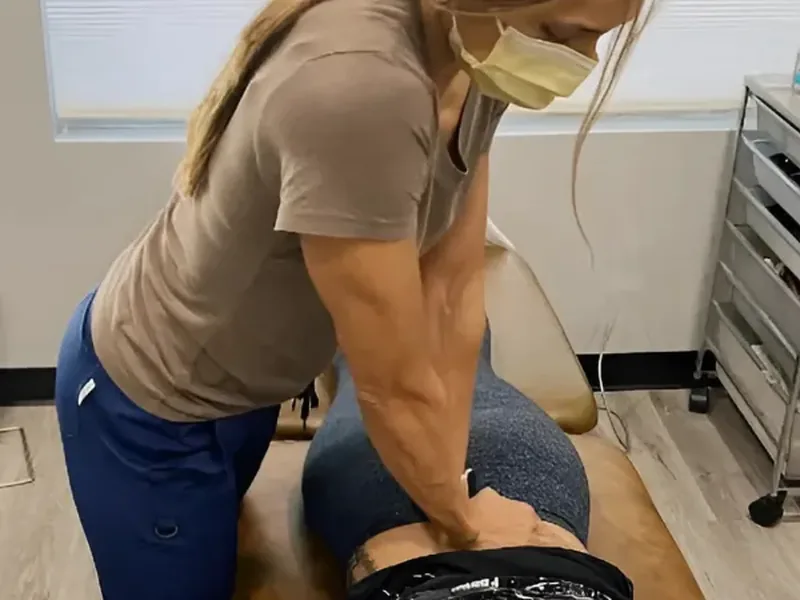
For a great many partial tears, and for some full-thickness ones, the goal is not to reattach the tendon. It is to make the rest of the shoulder strong enough that the tear stops dictating what you can do. Your licensed physical therapist tests each cuff muscle individually, checks shoulder blade control and mid back mobility, and builds the plan around what is measurably weak.
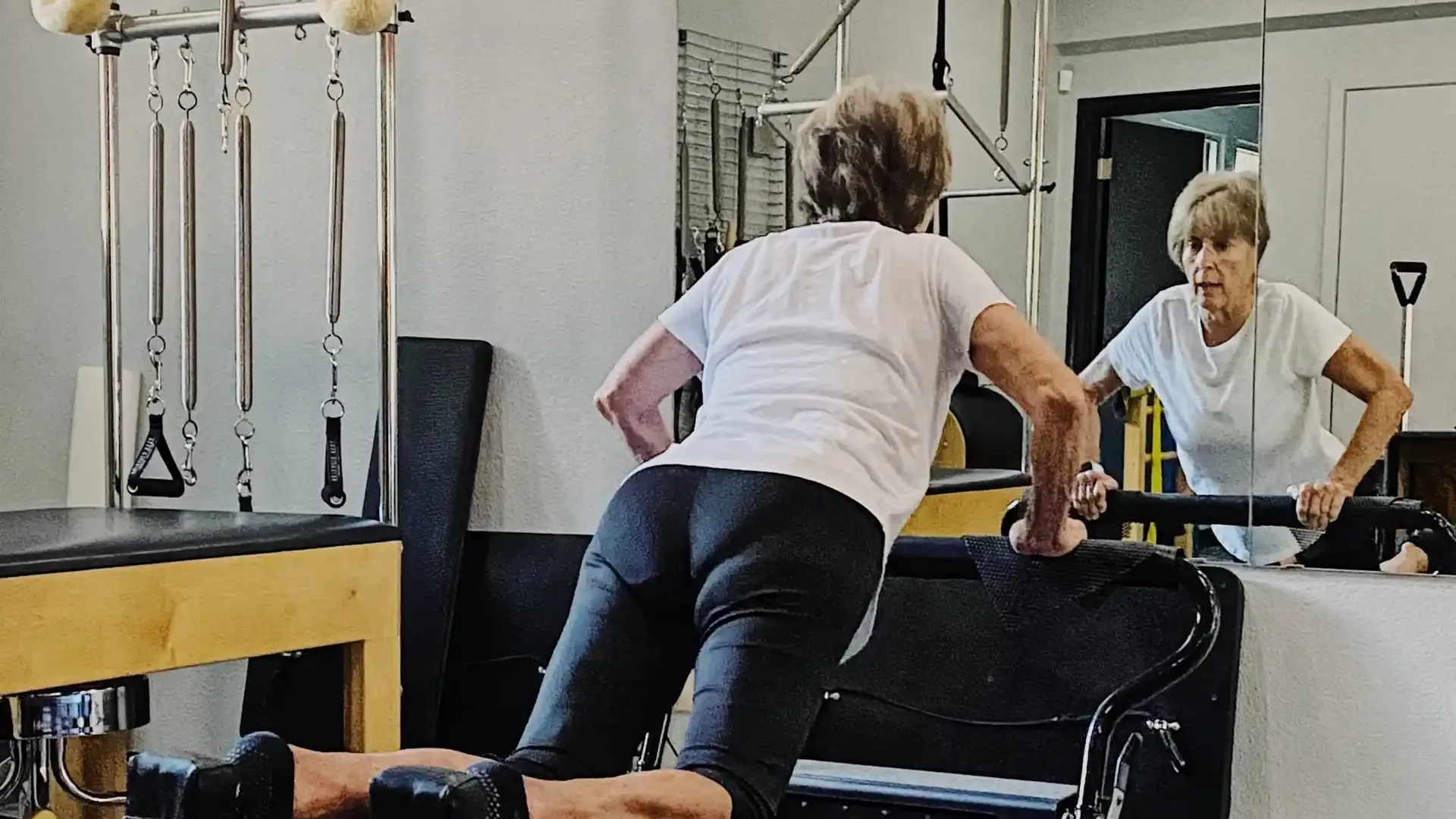
If you have already had a repair, the plan follows your surgeon's protocol: protected motion first, then active motion, then strengthening on the timeline the repair allows. Either way, hands-on work keeps the joint and surrounding tissue from stiffening, and Pilates-based work on the reformer and tower lets us load the shoulder in supported positions at a resistance we can control precisely. Progression is decided with your surgeon, not around them.
No referral needed to start in Texas. We are in-network with six major carriers, and most patients are seen within 48 business hours or less.
In a patient's own words.
"I have attended physical therapy for back and shoulder problems since 2014. Presently, I am attending therapy for shoulder surgery some months ago."Edna L. · Post-Surgical Shoulder Rehabilitation
Request Your Visit
In Texas you can see a licensed physical therapist without a doctor's referral for up to 10 consecutive business days. We are in-network with Aetna, Blue Cross Blue Shield, Humana, Medicare Part B, Tricare and United Healthcare.
Tell us whether surgery is behind you, ahead of you, or not on the table. We call back to confirm a time and check your benefits before you arrive, usually within 48 business hours.
Thank you.
Andrea will call you back to confirm a time and verify your insurance benefits. If you would rather talk it through now, call the clinic directly.