
The new joint is the easy part. Rehab decides how it feels.
A replacement changes the surface of the joint. It does not change the muscles around it, and those muscles have usually spent years learning to avoid the exact movements you now need back. That is the work. The window for some of it, knee extension above all, does not stay open indefinitely.
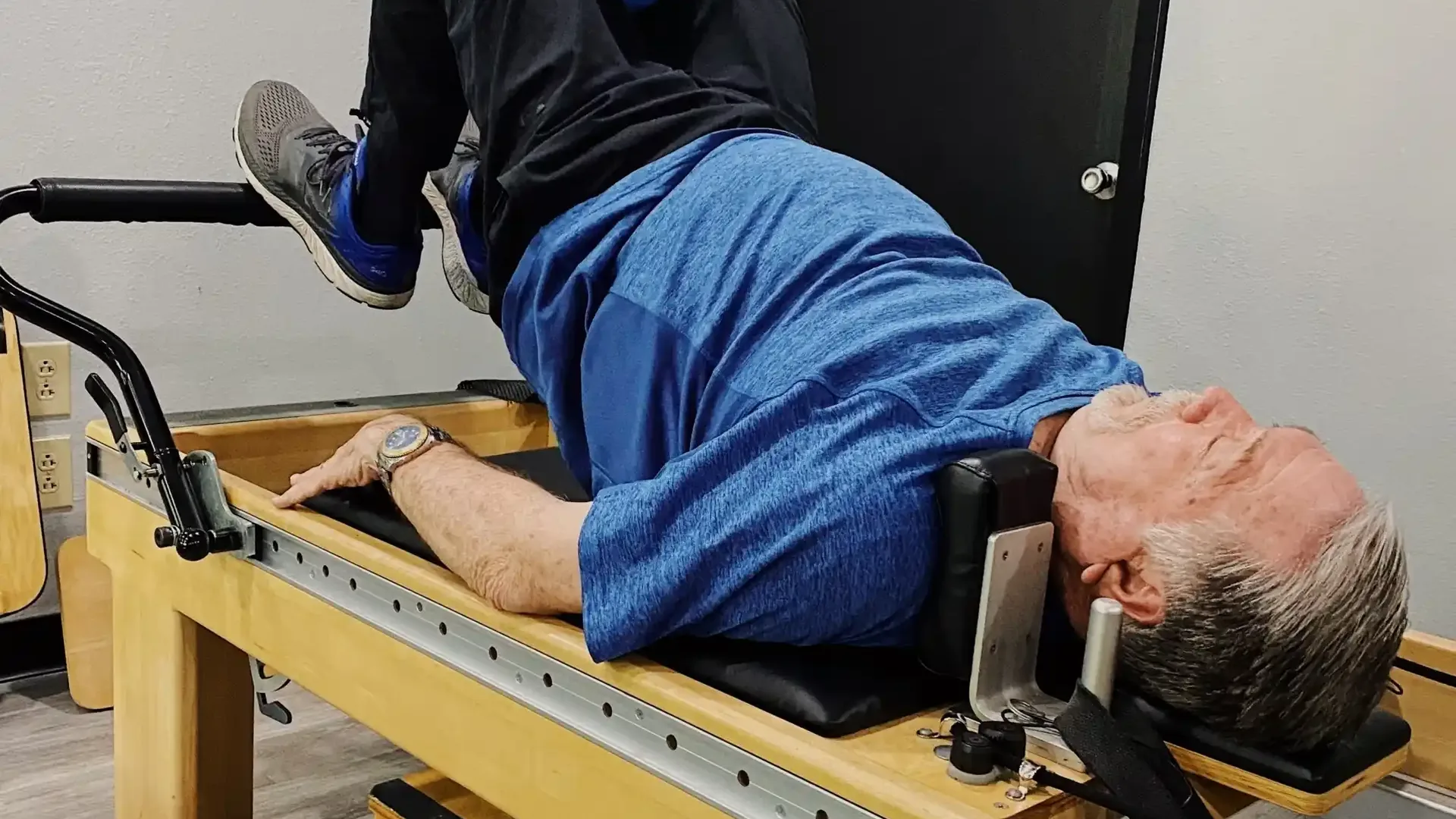
Your therapist coordinates with your surgeon’s protocol and precautions, then treats you one-on-one through every phase. The Pilates studio is what makes this look different here: reformer and tower springs let us load the operated leg while you are lying down, at a resistance we can dial to exactly what the joint will accept, weeks before standing on it would be reasonable.

From the first weeks to the last mile.
Protect, Then Move
Early on the priorities are swelling, range and safe weight bearing inside your surgeon’s precautions. We start scar mobility as soon as the incision allows, and make sure the walker or crutches are the right height and being used properly.
Wake the Muscle Back Up
The quadriceps and gluteals switch off after surgery and do not come back on their own. Reformer springs give us graded, controlled resistance for them lying down, then we take it upright: sit to stand, step ups, weight shifted honestly onto the new joint.
Walk, Climb, Return
The last phase is the one most people never get. An even walk without an aid, stairs one foot per step in both directions, and whatever it was you agreed to the surgery in order to do again.
Three surgeries, one clinic.
“Pyramid Physical Therapy has been so beneficial to me! Hate to say, but in the last 2 yrs, I have had 3 surgeries. The therapists there have seen me through rehab for all!”Bobbi B. · Post-Surgical Rehab
Start the part that decides the outcome.
Bring your operative report and any precautions your surgeon gave you. If the surgery has not happened yet, come in beforehand and go into it stronger.
In-network carriers here include Aetna, Blue Cross Blue Shield, Humana, Medicare Part B, Tricare and United Healthcare. No referral is required to start, and we aim to get you in within 48 business hours.
Thanks, we have it.
We’ll call you back to confirm a time and check your insurance benefits. If you would rather not wait, call the clinic directly.