
The joint is new. The walking pattern is not.
A hip replacement usually deals with the arthritis pain quickly, and that part can feel close to miraculous. What it does not do on its own is undo the limping, guarding and gluteal weakness you built up over the years the joint was wearing out. Your body learned to walk around a painful hip, and it does not unlearn that just because the pain is gone.
Your surgeon sets the rules for the early weeks, and which rules apply depends on how the hip was approached. Some patients are told not to bend the hip past a certain point, not to cross the operated leg past the midline, and not to rotate it inward; others are given a different set entirely, or very few restrictions at all. We work inside whatever protocol you were given, and if anything here differs from what your surgeon told you, your surgeon's instruction wins.
The things a new hip does not fix by itself.
These are the ordinary obstacles after a hip replacement, and each one has a specific answer. Some things are not rehab problems: calf pain, swelling or warmth, sudden shortness of breath, chest pain, fever, spreading redness or drainage at the incision, or a sudden inability to put weight through the leg all mean you should contact your surgeon or seek medical care right away.
Gluteal Weakness
The muscles on the side of the hip that keep your pelvis level are usually the weakest link, and they are the reason a limp lingers.
A Limp That Outlasts the Pain
A walking pattern learned across years of arthritis that stays behind long after the painful joint itself is gone.
Trouble With Low Seats
Getting out of a low chair, a car seat or off a low toilet, where the hip has to bend the most and push the hardest.
Reaching Your Own Feet
Socks, shoes and anything dropped on the floor, restricted both by stiffness and by whatever precautions you were sent home with.
Stairs and Curbs
Managing a step without hauling on the rail, which needs single-leg strength rather than more range of motion.
Waiting to Trust It
Entirely reasonable caution about loading a new hip, which quietly slows progress if nobody works through it with you.
Inside your surgeon's protocol, and aimed at walking evenly.
Your surgeon's protocol leads. We read it, we work within it, and we do not push you past it. Inside those limits, your licensed physical therapist restores the hip movement you are cleared to have, gets the gluteal muscles switching on again, and treats the soft tissue and the low back and knee that have been compensating for the hip for years.
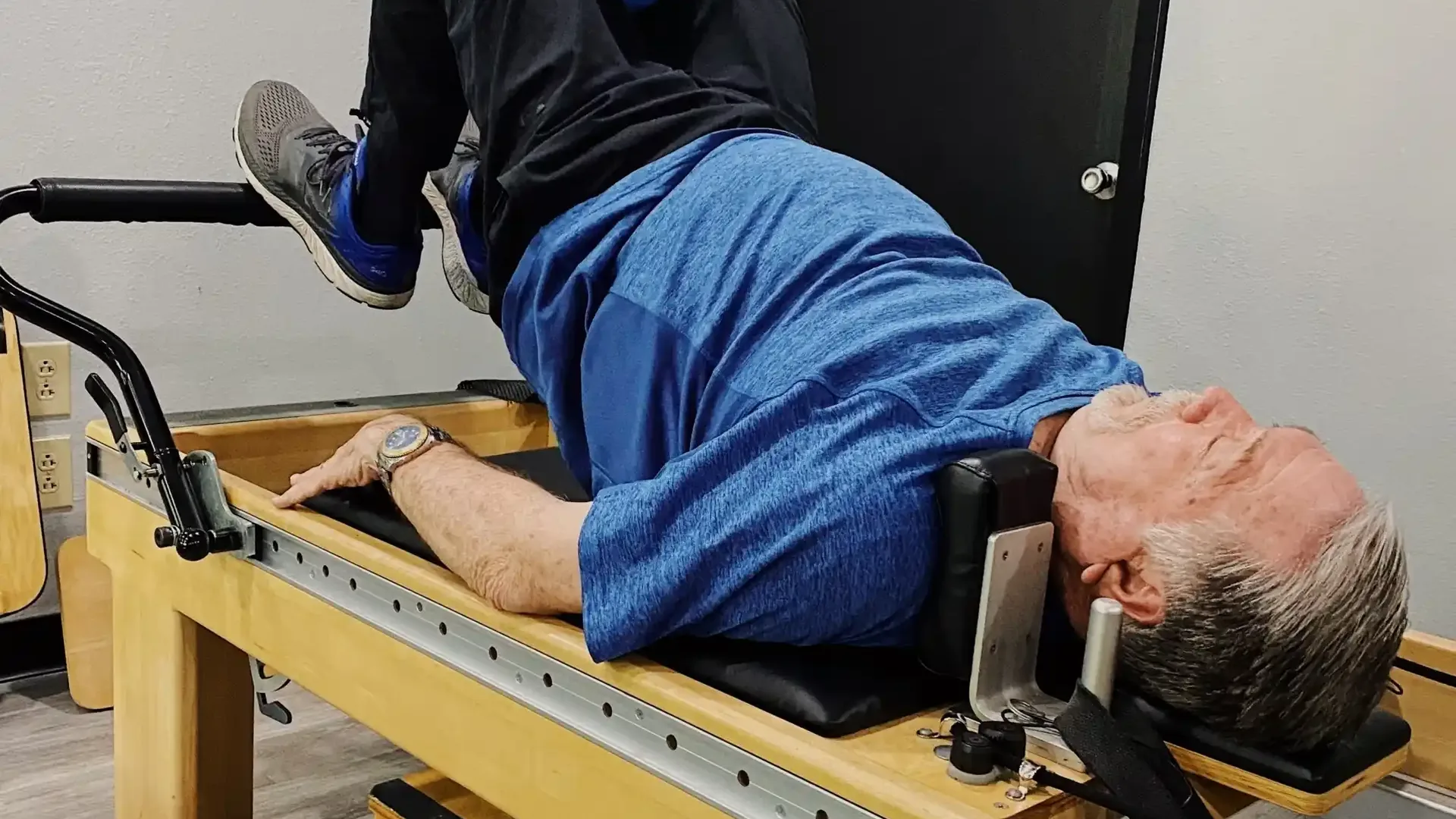
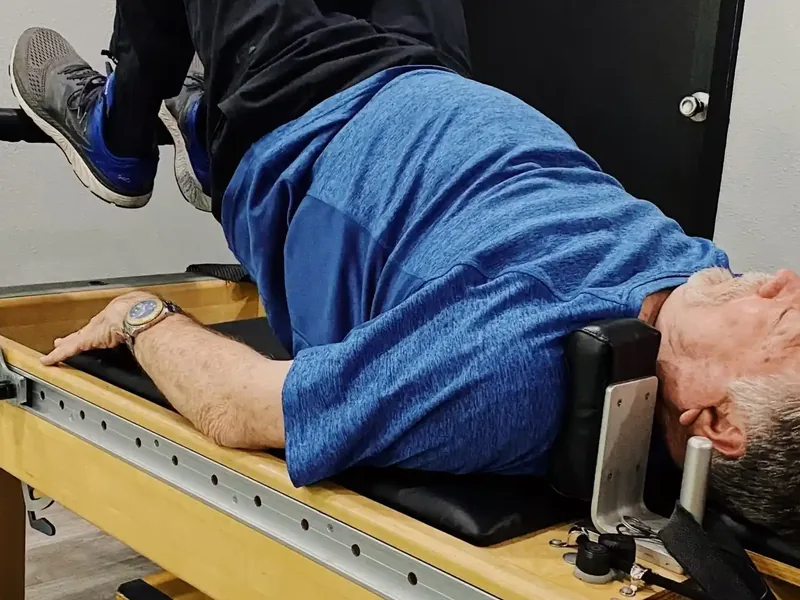
Then it becomes strength and walking. Hip abductor and extensor work is the center of the plan, because level hips are what stop a limp. Pilates-based work on the reformer and tower earns its place here, since it lets us load the hip in supported, controlled positions well before you could do the same standing. We finish on the open floor with gait retraining, steps and curbs, and the specific things you have told us you want back.
Bring your surgeon's protocol and we will work from it. We are in-network with six major carriers, and most patients are seen within 48 business hours or less.
In a patient's own words.
“Pyramid Physical Therapy has been so beneficial to me! Hate to say, but in the last 2 yrs, I have had 3 surgeries. The therapists there have seen me through rehab for all!”Bobbi B. · Post-Surgical Rehab
Request Your Visit
We are in-network with Aetna, Blue Cross Blue Shield, Humana, Medicare Part B, Tricare and United Healthcare. If your surgeon has referred you, bring the protocol they gave you.
Tell us when your hip was done and what you have been cleared to do. We call back to confirm a time and check your benefits before you arrive, usually within 48 business hours.
You’re all set.
We’ll reach out within one business day to confirm your appointment. If you need to speak with us sooner, call us directly.